
TDSB Moonshot Day – VROC and Skype


Moonshot prezi

PREZI click: HERE

Handout click: DLL_Strategy_Zoras

Screen Shot 2014-05-21 at 10.24.10 PM


TDSB Google Camp 2014 – Going Google! #GAFE


tdsb google camp picture


TDSB Google Camp 2014

This session will model the use of Google Apps for Education within my class. From setting up a Google Site as a classroom site and updating the Google Calendar, to preparing all presentations using Google Presentation. Then moving to using Google Documents for collaboration and sharing within students and even other schools. Students also produce their own YouTube videos and embed them onto the site. Google Apps has been a simple to use and consistent platform to blend learning and teach students 21 century skills. Come to this session with an open mind and embed as many of the apps as you like into your own classes.

For slides and presentations click here: https://sites.google.com/site/brandonzoras/tdsb—google-camp


The launch of Rhymes To Re-Education #HipHopEd

Full Album Here: https://www.facebook.com/media/set/?set=a.1483222145223799.1073741834.1468098256736188&type=3

What a great event!  The launch was everything a strong community event could ask for! The community was there! The change makers, community works, teachers, board employees, librarians and even the trustee and superintendent came out to support the launch.

Mahlikah acknowledged the land in which we learn and grow together on.  Toronto being the meeting place where this resource and learning has taken place.  In Hip Hop the DJ and the beat is considered the root.  The drum is the root for people, mother, and Earth as they have the same root word. We hear the drum we are hearing the heartbeat of our mother the Earth.  – Mahlikah

http://youtu.be/mRisDwINX6w


Ramon introduced Motion and J-Rebel to kick off the event with a demonstration of the art of MC’ing and Break Dancing while DJ Power laid down the beat.  The vibe in the room was contagious and sense of strength resonated through the room.  Ramon discussed with high energy the journey we took to get to the resource.  He acknowledged the communities already using Hip Hop and how it has been happening.  Ramon put a call out to the cypher to have artists and educators all together to create the hip hop curriculum.

http://youtu.be/6U_24sOry4g


Moose from Success Beyond Limits presented an amazing spoken word piece in the space.  It is youth like Moose that we want to engage in our systems and empower them to continue the amazing things they are doing for the community and be proud.

http://youtu.be/pieAEgRhG4k


The rest of the evening was a huge success with so many great people from the community coming together with the sounds of hip hop in the background.  Seeing so many people who care so much for the youth in our city was amazing.  There were people from all walks and all occupations in the space.  Hosting it in the Yorkwoods library just one block down from Jane and Finch was important.  To bring these successes and celebrations into the community where the youth are from is imperative.

The journey of myself as one of the teachers in the TDSB writing and working together with artists to give lesson feedback has been amazing.  I have learned so much from the community educators and artists and made new bonds.  It has also reinforced, not that I have ever doubted myself, that teaching students in urban areas is what I love to do.  Coming together to meet at Lawrence Heights Community Centre and working together to make a difference for youth is something I love to do.  It is important to acknowledge that learning by teachers and by youth doesn’t have to take place in classrooms in schools but also in the community.  At the same time the learning youth do in community needs to be acknowledged and happening in the classroom as well. I am proud to be part of the TDSB and being supported by them to be a part of this resource.

Thank you to all the amazing authors and for the amazing experience that will be on going.   Below is the list of all the people involved in the project!  Special shout out to Ramon who organized and brought everyone together!  He is a huge role model to me.

PROJECT COORDINATOR AND LEAD WRITER

Ramon “Rugged” San Vicente

CONSULTANTS

Karen Murray Itah Sadu

STEERING COMMITTEE

Nigel Bariffe
Karen Murray
Amanda Parris
Ramon “Rugged” San Vicente

CONTRIBUTING WRITERS

Wendy “Motion” Brathwaite
Roderick “RAHD” Brereton
Joseph “Joe G” Galiwango
Alison Gaymes San Vicente
Duane “D.O.” Gibson
Joseph “J Rebel” Hersco
Dalton Higgins
Danielle “Yelly” Koehler
Tesfai Mengesha
Jelani “J Wyze” Nias
Amanda Parris
Ramon “Rugged” San Vicente
Chelsea Takalo
Braxton “HiPPYxHop” Wignall
Brandon Zoras

Youth Writing Team

Luis “SPIN” Mejicano (Youth Coordinator) Kenny “Nii Soja” Adjetey
Shukri Dualeh
Trae Maxam
Aaleem Mohammed
Gazariah Morrison
Patricia Ghany
Cenzi Stilos

DOCUMENTATION AND VIDEO PRODUCTION TEAM

Director: Subliminal (Sean Mauricette)
Clairmont II Humphrey
Janeel Marshall
Trae Maxam

CYPHER CONTRIBUTORS

Nigel Bariffe
Akir Brathwaite CaveMan
Catherine Draper
Sameena Eidoo
Paul Green
Abshir Hassan
Clairmont II Humphrey
Nigel Hunter
Cade John
Salima Kassam
Teenat Khan
Janeel Marshall
Trae Maxam
Luis “SPIN” Mejicano
Gazariha Morrison
Lashawn Murray
Kenny “Nii Soja” Adjetey
Robin Phillips
Sharron Rosen
Itah Sadu
Moziah San Vicente
Nyelah San Vicente
Sojourner San Vicente
Subliminal (Sean Mauricette)


Rhymes to Re-Education Critical Hip Hop Curriculum Launch! #HipHopEd

I have had the pleasure to work with such a great team of Toronto Hip Hop Artists (all the elements) and Educators to put together this resource.  Nearly a year in the making, this resource brought together the community of people who want to see youth succeed in school and life!  It is about teaching through critical pedagogy and hip hop pedagogy to get youth to examine issues and make change in their communities.  School is not helping everyone to succeed, this resource is a counter to traditional teaching styles, pedagogy and curriculum which will engage students in your class or community. The lessons range from Grade 2 – 12 and have something for everyone with Ontario Curriculum links.  This resource is not just for school but a community resource that can be used after school and summer programs.  The website and YouTube channel also have a ton of information and downloads to accompany the book. Very proud of the entire team and how far we have come!

I hope to see you at the launch this Tuesday!

Location

Yorkwoods Library 
1785 Finch Ave West 
6 PM – 7:30 PM

Check the Facebook Event

https://www.facebook.com/events/1459920430909578/

Rhymes to Re-Education Website: http://www.rhymestoreeducation.com/

Rhymes to Re-Education Twitter: https://twitter.com/rhymesedu
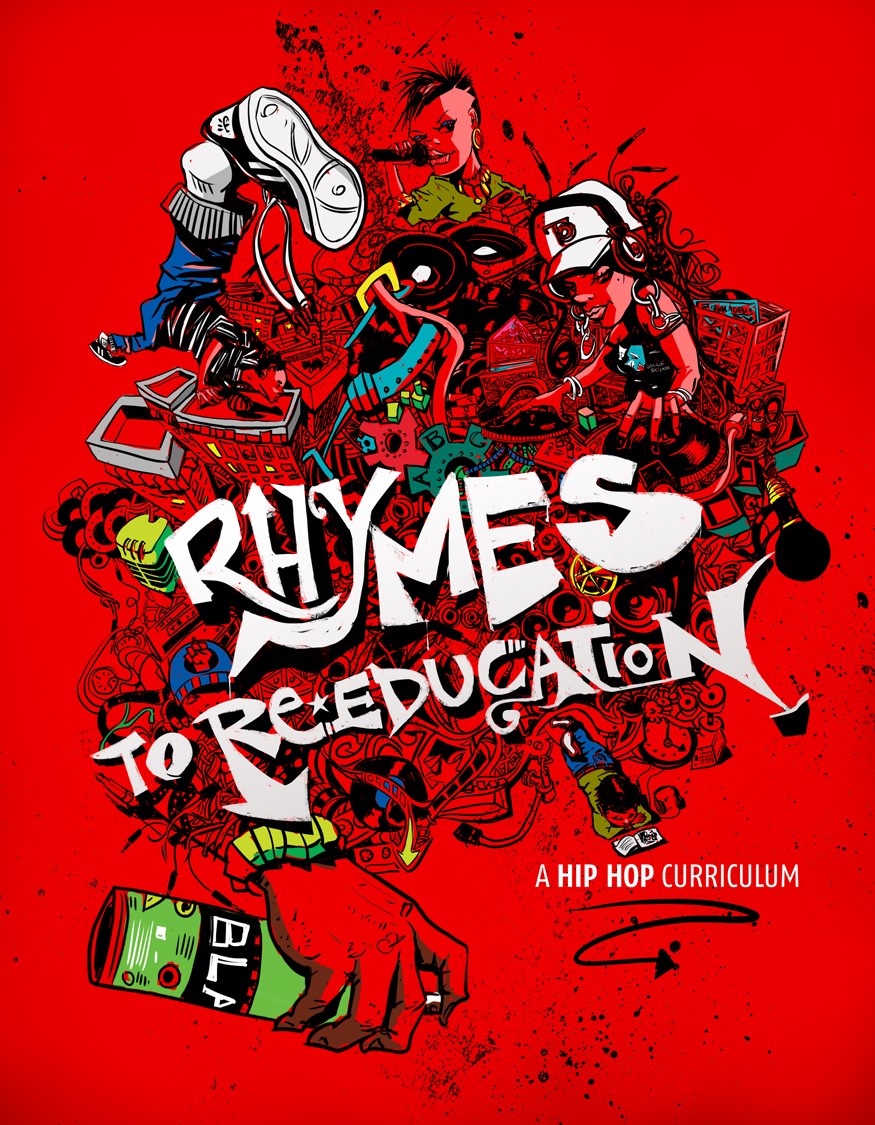
1507358_10101823339001310_6922272438793954183_o 793832_1479340578945289_4999537464614682437_o


Some of the great authors include:

Wendy “Motion” Brathwaite Roderick “RAHD” Brereton Joseph “Joe G” Galiwango Alison Gaymes San Vicente Duane “D.O.” Gibson Joseph “J Rebel” Hersco Dalton Higgins Danielle “Yelly” Koehler Tesfai Mengesha Jelani “J Wyze” Nias Amanda Parris Ramon “Rugged” San Vicente Chelsea Takalo Braxton “HiPPYxHop” Wignall Brandon Zoras Youth Writing Team Luis “SPIN” Mejicano (Youth Coordinator) Kenny “Nii Soja” Adjetey Shukri Dualeh Trae Maxam Aaleem Mohammed Gazariah Morrison Patricia Ghany Cenzi Stilos


TDSB STEPWISE Initiative: A Google Apps for Education Action Research Study #GAFEsummit

Google in Education Ontario Summit: EdTech Team 2014

2014-04-05 EdTechTeam Ontario Summit featuring Google for Education

TDSB STEPWISE Initiative: A Google Apps for Education Action Research Study

Presentation by Brandon Zoras and Joseph Romano

Presentation: https://sites.google.com/site/brandonzoras/on-gafe-presentation

Screenshot 2014-04-05 at 10.24.10 AM


#GAFEsummit


Hip Hop as Critical Pedagogy – Rhymes to Re-Education #HipHopEd #RhymesEdu

Today was an amazing day with so many amazing Toronto teachers!  Below is my Prezi

included is my masters work, Dr Emdin’s TedTalk and a breakdown of Akom’s article

Click here for Akom’s article: http://cci.sfsu.edu/files/Critical%20Hip%20Hop%20Pedagogy%20I.pdf

Screen Shot 2014-03-24 at 4.39.20 PM

Prezi: http://prezi.com/mqqe9l-udayx/?utm_campaign=share&utm_medium=copy

Make sure to follow Rhymes to Re-Education on:

Facebook: https://www.facebook.com/RhymesEdu

Twitter: https://twitter.com/RhymesEdu

As well use the hashtags #HipHopEd #HipHopEdTO and #RhymesEdu

Bonus here is AkaSubliminal’s Freestyle to Ramon’s Beat


Black History Month Conference Keynote Michael Eric Dyson – UTSC

John River – hope city – opened up the keynote with great stories through spoken word of the lived experience of a youth in our city
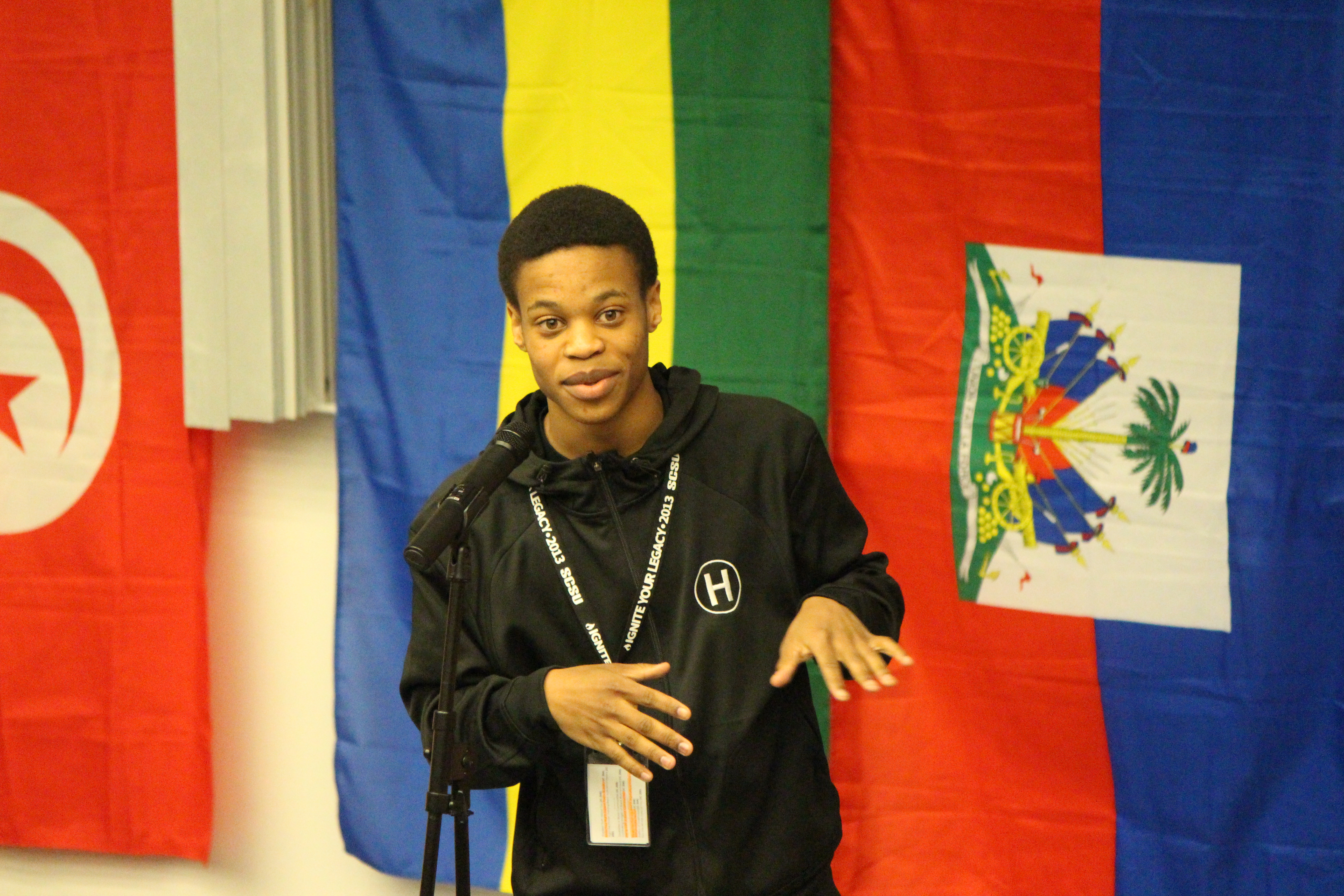
IMG_4799 IMG_4796

Michael Eric Dyson was beyond amazing! Below are my notes I was trying to scramble down on my phone as he was speaking!
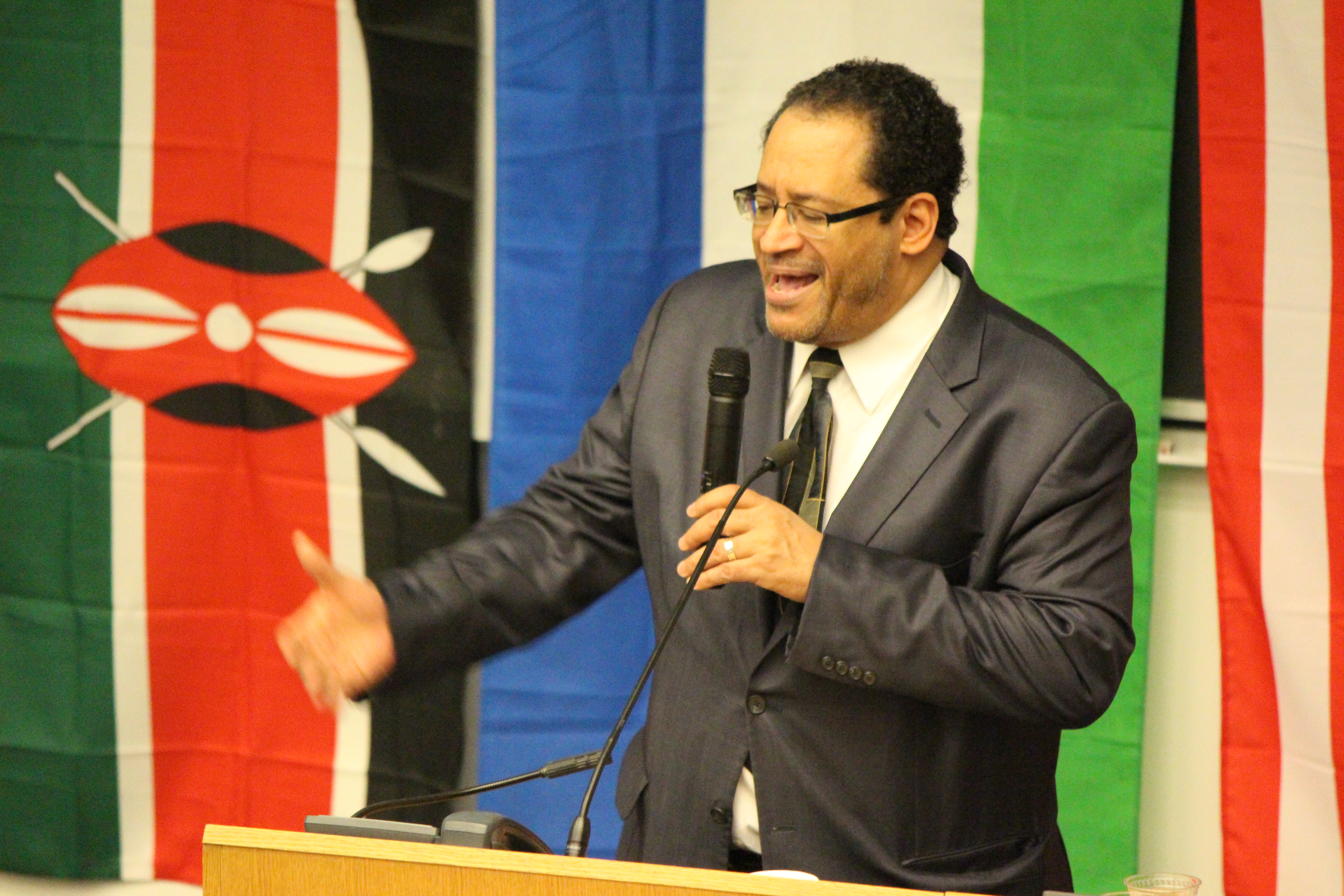
 IMG_4827

Disclaimer!!!

These are his words and opinions below. Although I agree with many of it, this is notes I took from him speaking!

We need transformation of the world that we live. Many aspects are part of our identity: colour, race, sexual orientation etc. We are in evolution and becoming who we are meant to be.

We all are wanting recognition of our humanity where society punishes us for our differences

Man kills a youth because the youth’s very identity provoked fear.

Another young man was gunned down because he provoked suspicion.

His very own identity has provoked this.

People are allergic to difference

People are uncomfortable with difference

Move to a radical preoccupation where all of gods children should be treated equally with love

When we talk about the 3rd world it is actually 2/3 of the world. They look like most of the people in the world

Difference is what challenges the norm, the narrow cookie cutter norms.

We live in a world where people are incapable of acknowledging difference.

They try to justify their homophobia on their racial identity. That isn’t blackness! They are ostracizing another group

He spoke of jealously of freedom struggle. How do they take our freedom struggle. Where is the copyright on freedom struggle. Would Martin Luther king pay royalties to Ghandi? Ghandi is a internationalist and globalist.

Give the life you have had and repurpose and repackage so it has a broader and deeper impact

People of colour are getting upset because their stuff(stuggle) is getting taken over

We go to church and then have to be homophobic again

This homophobia we nurture in the womb of our identity, that those practices of justice are what it is to be black or brown or yellow.

We got to challenge this

Sexuality is one issue

Shades is another

No racism but colour coordinated oppression going on!

Darker people are catching hell.

Indian people have shadism

The currency of acceptance is the demonization of colour!

Colourism is real within and between groups. It has to be challenged, we must celebrate all beauty

It’s hard to be a youth, older people are mad a young people

The older people paid the price and suffered so you can have it well.

Dying for freedoms they could never enjoy. Wearing the military uniform could get you beaten up (referring to American history where first black soldiers servered the US and came back to America, would be beaten up for wearing their uniform).

How do we talk about the N word. He first heard it from the pastor It’s not their privilege

Can’t call women bitches either

Snatched the chain of oppression, Nigger VS nigga

Its Linguistic appropriation

Sell out for that day. If you trying to get a job pull your pants up and sell out for that day.

Hip hop has issues but so does church: Misogyny, homophobia etc

Hip hop is judged the most. There is variety within the art form. Some is great and other is whack

Christopher Wallace (Notorious BIG) – famous philosopher

Listen to the pain in hip hop

Sean Carter – teachers couldn’t reach me

Conscious rap – Mos Def and Talib Kwali

Issue of gender

We saw we want to protect women from gangster rappers

They are the objects of lustful desires

Learn some other women! learn something new about the women you already know!

Real men aren’t afraid of real women

Systemic issues and disproportionate number of coloured people in jail

People from their own groups will replicate and duplicate harmful beliefs about their own communities.

People of colour think of abuse as love

Black church has to stop beating up on minorities within minorities. Having same faith is fine but you don’t have to have same religion

We try to get god to sign onto our bigotry

Below is advice he gave to a youth

Read as much as you can. Learn new words, read the dictionary, and learn a new word each day. Speak and listen to people you admire.

Words he gave to an adult on how to speak to youth

Talk to young people not lecture. They want limits and boundaries. They have friends, they need a parent. Give them a sense of what is possible. Willingness to admit error.IMG_4829

Hip Hop and Urban Education – OISE Talk

Great meeting everyone at OISE today! What a great session!

Here is the presentation below and handouts

Screen Shot 2014-02-26 at 8.02.59 PM

Prezihttp://prezi.com/grg3yfnpg1yi/?utm_campaign=share&utm_medium=copy&rc=ex0share

HandoutGuest lecture – handout

FaceTime + Class + Your Dad = Learning Electroplating!

Grade 12 IB chemistry was pretty fun yesterday! We were learning about electroplating and thought why not try and text my dad and see if he is at work.  My dad has been an electroplater his whole life and the head plater at his work.  No sooner did we text him, we were FaceTiming from our phones and learning! I used AirServer to connect my phone to my MacBook so that the students could see and recorded the call in app with AirServer.  The recording didn’t get us speaking but my dad came in loud and clear.

He gave us a tour of the nickel, copper, silver and gold plating tanks.  It fit in so perfect with my lesson and really shows chemistry in action.  STEM education is important and you need to know a lot about chemistry to do this job.  From choosing the proper electrodes, and solutions to getting the amount of volts and timing right, the students got to see live plating.

Check out the video below of my Dad, Peter Zoras, showing my TDSB class how to do platting!

Screen Shot 2014-02-24 at 3.44.57 PM


Teaching and learning global matters in local classrooms: Perspectives on infusing international and global understandings in the Ontario context

Excited to be presenting with an amazing group of people who do great work in education at the Comparative and International Educational Society (CIES) in Toronto this year.  full conference details at  http://www.cies.us/2014/ 

My work was on indigenous knowledge (See Presentation Four below)  More info on my part to come! (Click here for original post)


Sponsor:

SIG: Teacher Education and the Teaching Profession

Schedule Information:

Scheduled Time: Tue Mar 11 2014, 10:15 to 11:45am  Building/Room: Sheraton Downtown, Yorkville East
Title Displayed in Event Calendar: Teaching and learning global matters in local classrooms: Perspectives on infusing international and global understandings in the Ontario context

Session Participants:
Chair: Mark Evans (Ontario Institute for Studies in Education (OISE), University of Toronto)
Discussant: Kathy Broad (University of Toronto)
Presenter: David Montemurro (University of Toronto – OISE)
Presenter: Sarfaroz Niyozov aka Niezov (University of Toronto)
Presenter: Gary Pluim (Ontario Institute for Studies in Education (OISE), University of Toronto)
Presenter: Angela MacDonald (Ontario Institute for Studies in Education (OISE), University of Toronto)
Presenter: Karen Founk (Durham College, Notre Dame Catholic Secondary School)
Presenter: Robert Lato (OISE, University of Toronto)
Presenter: Margaret Wells (OISE, University of Toronto)
Presenter: Kurt McIntosh (OISE, University of Toronto)
Presenter: Brandon Zoras (Toronto District School Board)
Description of Session

SECTION A: Panel Overview

Teaching and learning global matters in local classrooms: Perspectives on infusing international and global understandings in the Ontario context

An increasingly interdependent global economy, the global reach of information and communication technologies, human migration and the changing demographic fabric of communities are, for example, connecting people from around the globe more than ever before. Major challenges, whether in health, environment, poverty, or peace and security, require cooperation and more integrated responses that extend across borders and boundaries. Simultaneously, there has been growing agreement that schools and educational systems in Canada and worldwide should be doing more to prepare youth to engage in today’s world thoughtfully and responsibly.

Not surprisingly, discussion about what global and international understandings and aspects of civic literacy are desirable for “21st century” teaching and learning has proliferated worldwide, as educational policy makers, researchers, and practitioners consider its many dimensions and inherent complexities (Mundy, 2008; Evans, M., Ingram, L., MacDonald, A., & Weber, N., 2009). A subset of the necessary understandings and skills include a knowledge base of how to prepare students for world-mindedness (Merryfield, 1998; Selby and Pike, 2000); how to cultivate critical literacy and planetary responsibility (Andreotti, 2006); and how to encourage deep understanding and civic action to redress global injustices (Davies, L., 2006; Oxfam, 2006). Central to this discussion, and aligned with the intent of the Education for All (EFA) goals, has been a focus on ways “to improve the quality of education.” Emerging notions of “globally competent teaching,” for example, are presenting difficult questions about the ways in which, for what purposes, and for who teaching and learning in schools is undertaken to strengthen learning that connects the local and the global.

Since 2002 the Initial Teacher Education Program at the Ontario Institute for Studies in Education, University of Toronto has undertaken a series of professional learning partnership inquiries between university instructors and K-12 educators. The Inquiry-into-practice Series, based on a collaborative inquiry approach, has aimed to improve the quality of education in K-12 schools by deepening participants’ understanding of a range of educational questions and issues and improving practice. The most recent theme undertaken in the Series is entitled, Inquiry-into-practice: Teaching and learning global matters in local classrooms. Twelve projects were undertaken this past year with opportunities for teacher educators, teachers, and teacher candidates to explore promising and innovative classroom and/or school-wide practices that infuse international and global citizenship understandings and aspects of civic literacy in and across elementary and secondary curricula and instruction in Toronto and Greater Toronto Area (GTA) classrooms (e.g., Critical Global Citizenship: Teaching for Student Engagement and Action; Using children’s literature to develop students’ understanding of sustainability in science education; The Refugee experience: A literacy, media and inquiry approach towards a personal and global understanding of ‘home’; Learning about self and the world beyond: Cultural and religious clubs in high school; Growing environmental learning: Identifying strategies and supports for successful school-university partnerships in environmental and sustainability education).

Data was collected within and across the projects with the intent to better understand promising and innovative classroom and/or school-wide practices that infuse international and global citizenship understandings and perspectives in ways that support learning in classrooms and schools with diverse student populations. This panel is unique in that its members represent various groups involved in the initiative and brings to the table administrators, researchers and study participants. We will be reporting on the intent and design of the project; a brief overview of sample projects (e.g., one, the trial and tribulations of preparing critical global educators; two, the need to redefine Indigeneity in local classrooms through global education; and three, the translation of international student teaching experiences to local classrooms); results from the data collected in relation to preferred purposes as well as practices and current scholarly literature in global citizenship education; and lastly, issues and challenges that were experienced. Particular attention will be given to Education for All’s goal “to improve the quality of education” and Ban Ki-moon’s recent announcement about the importance of strengthening global understanding and civic literacy among youth, identifying global citizenship education as a core pillar of the UN’s new Education First initiative.

References

Andreotti, V. (2006). Soft versus critical global citizenship education in development education: Policy and practice. Centre for the Study of Social and Global Justice, Nottingham University, http://www.osdemethodology.org.uk.

Collins, A., & Tierney, R. (2006). Teacher education accord: Values and ideals of the teaching profession in Canada. Education Canada, 46(4), 73-75.

Davies, L. (2006). Global citizenship: Abstraction or framework for action? Educational Review, 58, 1, pp. 5-25.

Evans, M., Ingram, L., MacDonald, A., and Weber, N. (2009). Mapping the global dimension of citizenship education in Canada: The complex interplay between theory, practice, and context. Citizenship, Teaching and Learning, 5, 2, 16-34.

Merryfield, M. (1998). Pedagogy for global perspectives in education: Studies of teachers’ thinking and practice. Theory and Research in Social Education, 26, 3, 342-378.

Mundy, K., Bickmore, K., Hayhoe, R., Madden, M., and Madjidi, K. (2008). Comparative and international education: Issues for teachers. Teacher’s College Press: New York.

Oxfam. (2006). Education for Global Citizenship: A Guide for Schools (Vol. Booklet). London, England: Oxfam.

Selby, D., & Pike, G. (2000). Civil Global Education: Relevant Learning for the Twenty- First Century. Convergence, XXXIII (1-2), 138-149.

Section B: Structure of the Panel Presentation

Presentation One: Brief opening remarks about the Inquiry-into-practice: Teaching and learning global matters in local classrooms initiative. This includes an overview of the aims of the initiative, the various inquiries undertaken, and an introduction to the panel presenters and their presentations.

Presentation Two: Bend without Breaking: Critical reflexive practice in Global Education

Global matters are often thought of as something happening “out there”, rather than dynamics that are deeply local, highly inter-relational, and intensely personal to Canadian classrooms. Critical reflexive practice (CRP) is one process for enabling teachers and learners to uncover that how “we” think about global issues can enable the very far-reaching, rights-infringing and oppressive structures that conventions such as EFA have been created to dismantle. Our study employed a vertical and longitudinal research design to investigate the rewards and challenges of critical reflexive practice experienced by three target populations: teacher educators, teacher candidates, and K-12 students. Over a three-year period, we researched participants’ experiences as they deeply engaged notions of perspective, identity, and difference through CRP. In this presentation we discuss the central findings and examine their implications for enacting a program of critical global citizenship education that invites learners to reflexively question: What and who is included in education for all?

Presentation Three: Sharing Global Classrooms: An International Experience

In order for EFA to be successful, educators need to know that issues of access, equity, and equality create barriers to schooling. A large part of the responsibility in changing these conditions lies with teachers. Teachers themselves require support in developing the necessary knowledge. International placements and teaching opportunities are one way to help teachers connect global issues to local classrooms.

This project examined the perspectives of 14 teacher-candidates from the Initial Teacher Education Program at the Ontario Institute for Studies in Education (OISE). The candidates completed an international internship in May, 2012 in one of the following destinations: Costa Rica, India, and Uganda/Rwanda. Upon returning they were expected to design and deliver a Unit of Study in local classrooms based on their field experiences. This inquiry documents candidates’ voices on the meaning, value, professional and personal impact of the international teaching experiences. In addition, our research describes the challenges of having candidates consolidate learnings from international contexts and the implications this has for programs.

Presentation Four: Centering Indigeniety for a Global Perspective

The aim of this project is to explore ways that Aboriginal Education as a framework of “indigeneity” can contribute to a deeper understanding of the diverse Ontario student population. Inclusive education discourse in Canada generally refers to “Indigenous” in reference to Aboriginal/First Nations Peoples. Yet, in a context where Africentric schools and significant cultural and faith-centered communities comprise the Greater Toronto Area (GTA), Indigenous Education can serve as a framework to address diverse worldviews. When broadly conceptualized “indigeneity” refers to the beliefs, values, and ways of knowing that are rooted in a cultural heritage.

In our examination, we followed four educators who were teaching diverse student populations. Our study explores how their teaching of “indigeneity” impacted curriculum-based learning and increased understandings of the “self”. We report on how specific practices positively influence student engagement in the classroom and teacher engagement in their work. The findings also identify that educators hold two distinct conceptions of indigeneity: one that emphasizes the marginalization of particular cultural heritages and another that focuses on the ways that individual lived experiences inform the way we know the world.

Presentation Five: Results from the cross-inquiry project study

Brief discussion of some of the preliminary results gleaned across the various inquiries. The results are discussed in relation to current and pertinent scholarly literature with particular attention given to the challenges of infusing global and international understandings and aspects of civic literacy in local Toronto/GTA elementary and secondary classrooms and schools in which student diversity is the norm. Consideration will also be given to the value and limitations of this form of professional learning that foregrounds professional inquiry and collaboration.

Presentation Six: Bringing Quality Education to a New Level – Strategies on how to help teachers connect the global and the local in Canada and beyond.

The presenters highlight ten promising practices on how to make the global and local connection in Ontario and beyond. By drawing from all the inquiry practice projects, the directors answer what it means to be a global educator in the 21st century and offer quality education.

SECTION C: Panel members, their institutional affiliations and contact information

Presentation One, Five, and Six:

KATHY BROAD: Department of Curriculum, Teaching and Learning, University of Toronto, 252 Bloor St. West, Toronto, Ontario M5S 1V6, Email: kbroad@oise.utoronto.ca
MARK EVANS: Department of Curriculum, Teaching and Learning, Ontario Institute for Studies in Education, University of Toronto, 252 Bloor St. West, Toronto, Ontario M5S 1V6, Email: mark.evans@utoronto.ca
DAVID MONTEMURRO: Department of Curriculum, Teaching and Learning, Ontario Institute for Studies in Education, University of Toronto, 252 Bloor St. West, Toronto, Ontario, M5S 1V6, Email: d.montemurro@utoronto.ca
MIRA GAMBHIR: Inquiry into Practice Project Coordinator, Ontario Institute for Studies in Education, University, 252 Bloor St. West, Toronto, Ontario, M5S 1V6, Email:mira.gambhir@utoronto.ca

Presentation Two:
GARY W.J. PLUIM: Faculty of Education, Lakehead University, 500 University Ave., Orillia, ON, L3V 0B9, M5S 1V6, Email: gpluim@lakeheadu.ca
ANGELA MACDONALD: Masters of Teaching Program, Ontario Institute for Studies in Education, University of Toronto, 252 Bloor St. West, Toronto, Ontario M5S 1V6, Email: angela.macdonald@utoronto.ca
SARFAROZ NIYOZOV: Department of Curriculum, Teaching and Learning, Ontario Institute for Studies in Education, University of Toronto, 252 Bloor St. West, Toronto, Ontario M5S 1V6, Email: sarfaroz.niyozov@utoronto.ca
KAREN FOUNK: Secondary Teacher, Durham College, Notre Dame Catholic Secondary School Campus, 1375 Harwood Ave. North, Ajax, ON, L1T 4G8, Email: Karen.Founk@durhamcollege.ca

Presentation Three:

ROBERT LATO: Initial Teacher Education Program, Ontario Institute for Studies in Education, University of Toronto, 252 Bloor St. West, Toronto, Ontario M5S 1V6, Email: robert.lato@utoronto.ca
SARFAROZ NIYOZOV: Department of Curriculum, Teaching and Learning, Ontario Institute for Studies in Education, University of Toronto, 252 Bloor St. West, Toronto, Ontario M5S 1V6, Email: sarfaroz.niyozov@utoronto.ca
MARGARET WELLS: Initial Teacher Education program, Ontario Institute for Studies in Education, University of Toronto, 252 Bloor St. West, Toronto, Ontario M5S: margaret.wells@utoronto.ca

Presentation Four:

KURT MCINTOSH: Initial Teacher Education program, Ontario Institute for Studies in Education, University of Toronto, 252 Bloor St. West, Toronto, Ontario M5S: kurt.mcintosh@utoronto.ca
BRANDON ZORAS: Secondary Teacher, Toronto District School Board, 5050 Yonge Street
Toronto, Ontario M2N 5N8
Email: Brandon.Zoras@tdsb.on.ca