
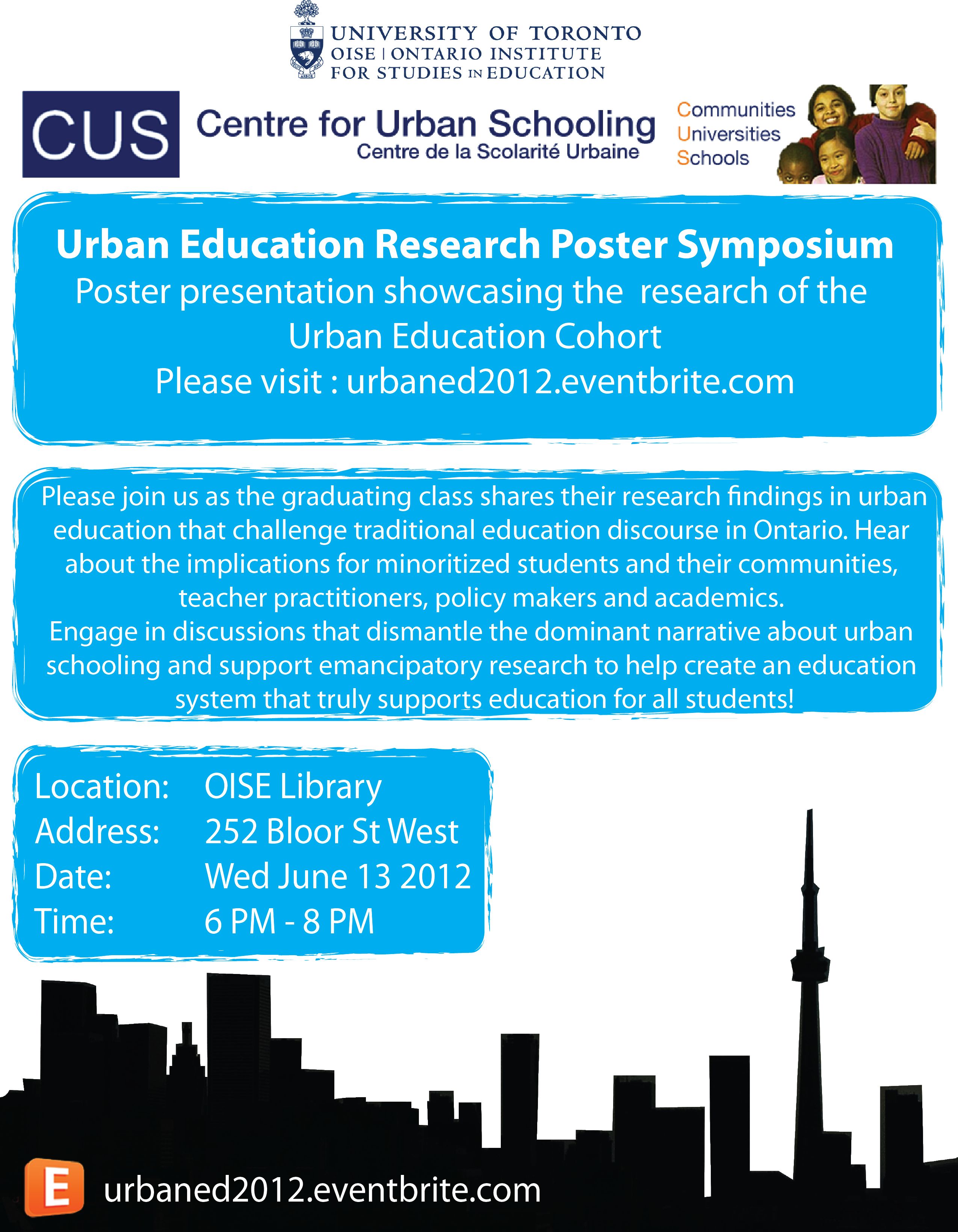
OISE Masters of Education Urban Education Symposium
All the M.Ed. Urban Education students will be be presenting our posters at our event. Please share with those who have an interest in urban education as there are many great research topics.
Please join us as the graduating class shares their research findings in urban education that challenge traditional education discourse in Ontario. Hear about the implications for minoritized students and their communities, teacher practitioners, policy makers and academics. Engage in discussions that dismantle the dominant narrative about urban schooling and support emancipatory research to help create an education system that truly supports education for all students!
REGISTER HERE: http://urbaned2012.eventbrite.com/
Success of Teaching to Teachers, Using Demonstration Classrooms to Improve Pedagogy and Practice
I was asked to lead a demonstration classroom to 8 other teachers within my school board. I was nervous at first, as I knew I was going to be one of the newest and youngest teachers there (which turns out I was). I was also very excited to share some of the ideas I have tested and receive feedback.
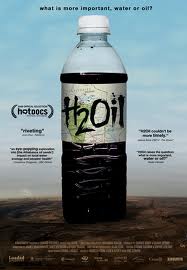
The session was called Incorporating Literacy & STSE to Engage Digital Learners. I firmly believe a great way to engage applied students in science is to pose a problem that is relevant to them. We started off by watching the trailer to the documentary called H2Oil (http://www.youtube.com/watch?v=xenYLY5lU58) , and then an ad from Cenovus Energy, a company wanting to extract oil from Alberta Oil Sands (http://www.youtube.com/watch?v=D1mZMOP-wbY) . I had the students write on an oil drop if they believed we should remove the oil from Alberta and sell it to other countries. The students had various opinions, and were given the option to change their opinion once they watched both trailers. The following week we actually screened the full H2Oil documentary to the students.
The other teachers came into the room and watched how the students used netbooks to create a wiki about power generation. The lesson plans will be placed below the post. The idea was a new island was formed in Lake Ontario that needed its own type of power generation. The students needed to make a wiki to make a pitch to the mayor to choose their best power generation (nuclear, coal, solar etc.). Students had time to research and then use Wikispaces to create the site that included diagrams, picture and YouTube videos. The teachers were very impressed with how seamlessly the technology was integrated into the lesson. That is how technology should be integrated, the curriculum and concepts are more important, technology is the tool used. We can grow our technology skills and transfer them to other areas as well. We ended with an Exit Card, which had the students write down 3 things they learned, 2 things they wanted to learn more about and 1 way they can make a change to help the environment. This allowed me to read them and see what they learned from the lesson and what I needed to add next time, as well as their interests.
The debriefing of the demo class went very well, we worked together with the Instructional Leader for science to provide feedback and also how the other teachers could do this same lesson this year. I really enjoyed running the session and hope to do another soon. It is very important as a teacher to step out of your classroom and try a new project once and a while. The most important thing about technology that I have learned is that the students will always surprise you by doing something beyond or even helping you when you are stuck.
Electrical Energy Wiki Assignment Handout
Lesson Plan SNC1P Power Generation

Learning Virtually with Virtual Researcher On Call (VROC) Partnership between University of Toronto and TDSB.
Today our class had a virtual researcher in our grade 11 Chemistry class. Dr. Sanchita Bandyopadhyay-Ghosh joined us from the University of Toronto to talk about Green Chemistry. She is from Centre for Biocomposites and Biomaterials Processing University of Toronto and works with biodegradable composites, cellulose nanofibres , biopolyol and biofoam.
Her lecture was informative discussed the major links chemistry has to industry and the environment. She graciously shared her work in the field and discussed the next steps. She challenged to students to enter into science fields to fix the problems we have and make a sustainable future. She shared her passion for the environment and told the students how she got involved and why she keeps on working in this field.
“2050 ‘biological capacity’ equal to two planet earths would be required to keep up with humanity’s resource demands and waste production.”
VROC has proven to be an excellent tool for the classroom. We were able to link chemistry to a researcher in the field and look at the environmental impact.
Thank you Carol from VROC and Dr Sanchita Bandyopadhyay-Ghosh for participating in an enriching learning experience on Green Chemistry with the Toronto District School Board.


Earth Day Resources for Schools and Companies
Earth Day is today but next week our school is celebrating it all week long! Here are some great ideas for your work or school.
We want to spread awareness about the environmental concerns and get students to start thinking green and making decisions that are better for the Earth. Why not try some of these ideas in your school or company to help keep things green!
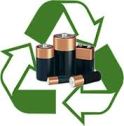
Batteries for Baked Goods – will allow students to trade in dead batteries for baked desserts and treats. Having batteries go into a landfill will result in heavy metals leaking into the soil and water. You can bring batteries to many stores like Ikea and Staples for recycling.
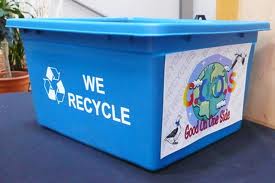
Eco-Pads – beside the photocopiers we keep a good on one side paper bin. If someone copies something wrong or only wants single sided copying they can use the paper from this bin. We have had a large collection of this paper so started to create notepads from this to recycle. Try putting out a bin by your copiers at work to promote similar initiative.
These Come From Trees – Stickers have been up all around the school to save paper. This was seen at U of T / OISE and we emailed the company to get on board. Since then, all our paper towel dispensers, toilet paper dispensers, copiers and printers have this sticker on them to remind people to use less paper. Why not get your company on board http://thesecomefromtrees.com

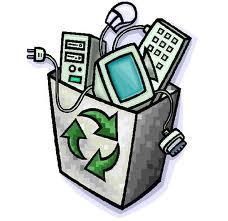
Toxic Taxi E-Waste Pick Up – With technology always becoming out-dated the moment you bring it home, we have such a high turn over of electronic waste. Computer monitors, computers, printers, fax machines, TVs, all pile up in landfills leaking harmful chemicals into the ground. See Toxic Taxi http://www.toronto.ca/garbage/hhw.htm#a002a for info.
Story of Stuff – Why not screen these animated movies. Story of Stuff, Story of Electronics and Story of Bottled Water are all amazing short movies on our addiction to consuming at the cost of the environment. Check out these great movies. http://www.storyofstuff.org/
HotDocs and H2Oil Screening – We applied to host a HotDocs screening and will be showing H2Oil, a great documentary about the Oil (Tar) Sands in Alberta. It is important to see the damage created in Alberta from our addiction to oil and its by-products. See http://h2oildoc.com/home/ for more information and trailers.
Cell Phone Recycling Toronto Zoo – Phone Apes is a great program that you can put in your own company. Request a box and they will send one out ASAP. Collection of used cell phones is important to recycle but also to re-use the metals in the phone that are mined in Africa. The metal is found in the rain forests of the Congo, which are destroyed to get out this for our phone needs. Request a box today! http://www.torontozoo.com/conservation/PhoneApes.asp

For more tips see our schools Eco Clubs website http://ecocare.wikispaces.com/
ICT Mobile Netbooks Great Addition To Circuit Lesson For Engaging Learners In Science
Today we had a great lesson with using circuits. Having just learned the symbols and how to create circuit diagrams, we moved onto circuit construction with series and parallel circuits. One of the best free resources out there for electricity comes from University of Colorado, PhET (phet.colorado.edu) using the circuit construction kit the students were able to make their drawings into online circuits, then use the equipment to make the physical circuit.
Having the mobile cart of netbooks was a great addition to this lab. We were able to bring a laptop to each work station and have students connect the diagrams, simulations and physical circuits. The students were incredibly engaged and started testing out their own circuit ideas. This allowed another level as well as a chance to practice computer skills. It is also beneficial, as many companies will use simulations to test before making costly prototypes.
The lesson started out with learning the basics and having students build simple series and parallel circuits, but quickly turned into challenges and problems that students needed to use their knowledge and critical thinking skills to solved. Students were told they were hired by a brand new game show that required contestants to flip switches to light up their answers. They had to figure out how to wire it, test it as a simulation and then physically build it.
Netbooks/Laptops have been an amazing part of my science lessons as it gives students an opportunity to become more engaged in science. It is preparing them to meet the needs of higher education and employers who use technology with science hand in hand.

Learning and Creating Science with Technology
Our school has been involved in a lot of pilots and demonstration classrooms. I love working with technology where I can and especially sharing it with the students. We have been asked to document some of the technology and computer software that we use to enrich the science experience in our classes. Instead of listing a bunch of software we decided to demonstrate it being used for science.
Two problems exist when introducing new technology into a school. You need staff to buy into it, and also invest time in to not just learning it but to effectively integrate it into curriculum and the classroom. The novelty and experience should not be about the particular software/hardware itself but the learning experience of the subject. No one now brags about email or how they can type a word document. That is just a common tool like paper and pencil. These new technologies should fluidly be integrated where the students appreciate it but what they learn is the skill of that tool and the content. This allows them to apply this new skill to other applications, for both school and personal use.
A simple example, let’s look at a Prezi presentation. The students are the creators, not just consumers, where they can creatively communicate knowledge. Students can research an environmental issue and see how it affects certain groups of individuals. They then can use Prezi in other classes and for fun projects. The issue is when the teacher gets too caught up with Prezi itself and does not know how to pair it with a lesson. A teacher normally make brochures and just transfer the project from a paper to digital medium. This is a good first step, but sometimes the learning is more focused on the technology itself and not the content.
With the newest technology we need to move from consumer to creator. Instead of simple viewing of material we want technology to allow us to manipulate variables, allow for changes and publishing student ideas. Hope you enjoy the video and it gives you some ideas to apply technology in your classroom or workplace. It features 2 other teachers from our school as well.
Global Teenager Project Connects Kenya and Canada
I was offered a spot to take place in a project with Global Teenager Project (GTP http://www.globalteenager.org/) with my science class this semester from my Vice Principal and Anita Townsend representing GTP. The project uses wikis, learning circles and research to answer global questions. Our theme was the environmental sustainability and we were in a collaboration with Kenya, two other Toronto schools, Liberia, Ghana, two from Romania, and Hungary. Students first introduced themselves and shared information about their community and culture. The main mode of communication was on a wiki. This allowed for a fluid and collaborative platform. Questions were formulated by each group that were later to be answered by each country.
Upon emailing the Chavakali High School, we decided to try a Skype video call between the students to introduce each other and then have a further session to discuss our questions revolving around sustainability. Ms Sugai is the teacher in charge of the tech club who is from JICA (Japan International Cooperation Agency).
The Skype session was one of the most engaging activities I have seen students participate in. Both groups high school students realized how similar they actually are, including school, sports, music tastes and food. We also shared our traditional aspects of our cultures that each group had a rich diversity and strong interest in each other.
This laid the foundation for our next session where we will go in more depth about environmental sustainability. This is such an amazing way to view the environment as a global issue. Students can see that students in another continent are concerned about the environment and are just as worried about the health of our planet. The youth are the next wave of people to make a major difference as they can educate their parents, make smarter choices now and develop a way of life that is sustainable.
Follow the Wiki below
https://gtpenvironmentalsustainabilityfeb2012.pbworks.com/w/page/50830328/FrontPage 
OISE Dean’s Graduate Student Research Conference 2012
OISE Dean’s Graduate Student Research Conference 2012
Brandon John Zoras, URBAN SCIENCE EDUCATION IN TORONTO INNER CITY SCHOOLS: WHAT HAPPENS AFTER GRADE 10 SCIENCE?
The OISE Dean’s Conference was a valuable conference that gave a space for graduate students to showcase their work. It was inspiring to see the amount of researchers and breadth of research topics discussed.
I was partnered with three others in a science themed conference. Lydia Burke looked at perceptions of the western science teacher in a post-colonial context, Darren Glen Hoeg presented on social structures in science education and teacher identity and HyeRan Park presented on the relationship between students’ understanding of nature of science.
With a 15 minute limit, it was hard to get into the entire picture of my research but it was a great opportunity to showcase my findings thus far. To summarize my presentation I have attached the Power Point presentation slides as a PDF.
My rationale for this project was based largely on the fact I am an urban science educator. I see on a daily bases what happens in schools and classrooms. I noticed many males are not taking science passed grade 10 science in inner city schools. I wanted to find out then what was happening as I believe science to be very important in school, the work force, post secondary and being scientifically literate. Interviews were based on 18 males from two inner city schools in Toronto.
Briefly, the findings showed that the applied level students were passing at a lower rate than academic students. The averages of the students interviewed in their grade 10 science course was 54%. According to the Ontario Science Curriculum (2008) a mark between 50-59% letting them leave science with “limited understanding of facts, concepts and knowledge” as well as “limited ability to problem solve, transfer knowledge, use critical thinking and make connections to the community”. Sadly students are taking this last science course and not becoming scientifically literate citizens.
My dream is not to have everyone in science, I want everyone to understand it. A mechanic can not take science after grade 10, but I would like them to understand the chemicals they are working with, and recycle oil and harmful products. A businessperson making large purchases or company decisions would hopefully understand the environmental impact of their decisions. As well someone diagnosed with a disease could have a better understanding and not tricked by pseudoscience and miracle cures.
I also discussed what the students thought a scientist looks like. Over 80% of the students mentioned: scientists are often white older males. When you Google scientist, you get the same pictures so we need to change the perceptions so that students realize scientists do look like them.
To keep this short, my main implications are to remove barriers, include cultural content and indigenous science, positive teacher-student relationships, give student ownership, more inquiry lab activities, and have community integration.
Full paper coming soon for more info! Power Point Here: –> Deans Conference Powerpoint <–

Elephants Toothpaste
Fun demo we did in my grade 9 class last week. This was a hook to chemical reactions. We talked about how some reactions happen pretty slow but can be sped up with a catalyst. Here we used potassium iodide with hydrogen peroxide (30%) with some soap and food colouring.
 brandonzoras.ca